With the growth of renewable energy, more and more homes, companies, and construction projects are trying to lessen their reliance on traditional power grids. The production of solar energy is lower on cloudy days and at night, but it can produce clean energy during the day. That’s where battery storage comes in. It allows you to store your solar power and use it at a later date.
The advent of solar systems with battery storage solutions is thus highly useful. When solar electricity is coupled with battery systems, the user gets increased availability of energy, reduced dependence on power grids, and the ability to manage electricity consumption more effectively.
Understanding Grid Independence
It should be noted that grid independence does not imply the total disconnection from the power grid for most users. Besides complete independence from the conventional energy source, grid independence also means the ability to minimise one’s consumption of energy supplied by the power grid and have an alternative source of electricity in case of an interruption in the power supply by the grid.
A solar battery system works on a simple principle:
- Generate: The solar panels generate electricity during the day.
- Store: The surplus electricity that comes in excess is directed to the battery.
- Use: The electricity stored in the battery can be used in cases of insufficient solar energy generation.
Thus, solar energy is helpful at night or when there is supply fluctuation.
How Batteries Change Solar Energy Usage
A classic solar system generates electricity only when sunlight is available, meaning that there may be instances when electricity produced exceeds one’s energy consumption. In such cases, the help of the battery is needed to store the excess energy produced by the system. Solar and storage systems allow surplus energy to be stored for use at a later time. This is beneficial for evenings, low solar generation times, and peak demand periods.
Benefits of using battery storage include:
- Increased use of locally produced solar energy
- Reduced dependency on the grid
- Events management
- Energy efficiency
- Enhanced use of renewable energy
The degree of grid independence depends primarily on solar capacity, battery size, electricity consumption, and system design.
Solar Off-Grid Systems for Remote Applications
In places where the grid is unavailable or unreliable, solar off-grid systems can be a source of independent electricity.
This technology typically includes solar panels, batteries, inverters, and energy management systems used together. Batteries store electricity produced while sunlight is available and deliver it when not.
Common uses include:
- Rural areas
- Agriculture
- Telecom system sites
- Lighting
- Temporary facilities
Effective sizing of the system is vital and requires the solar panel and battery to create enough energy to meet the operational needs.
Why Battery Technology Matters
The battery is one of the most important parts of a storage system. High energy density, efficient charging, high responsiveness, and long charging and discharging cycles are some of the reasons why lithium-ion technology is preferred. With the rise in the need for energy storage systems, Li-ion producers are investing in technology that enhances safety, improves thermal management, increases lifespan and efficiency, and lowers costs.
When choosing a battery system, consumers must keep in mind several criteria based on the battery's characteristics:
- The available capacity
- Life expectancy
- Charge and discharge process
- Safety measures
- Thermal regulation
- Maintenance
- Compatibility with the solar system
The effectiveness of a battery will largely depend on the type of technology used.
The Role of Smart Energy Management
A battery is not the only element influencing the effectiveness of a solar battery system. Efficient energy management helps users to determine when and how energy is produced, consumed, transferred, and supplied.
Monitoring systems can inform about the following:
- Solar electricity production
- Battery capacity
- Power consumption
- Energy supplied from the grid
- Effectiveness
Thanks to this data, a user can take steps that help use renewable energy more efficiently.
Battery Storage Support for Energy Planning
The increasing need for high-quality energy storage will create demand for certain batteries that can boost the efficiency of energy consumption for businesses and other organisations.
The Battery Energy Storage Systems of Waaree Technologies can find applications in various fields, such as commercial energy storage, power plants, and street lighting systems.
For those organisations that plan on using renewable energy, the use of solar energy together with an appropriately designed battery will enable managers to get more benefits from energy planning.
Key Benefits of Solar Battery Systems
Key advantages of solar battery systems include:
- Reduced dependency on electricity from the grid: The utilisation of solar energy enables one to consume less electricity supplied from the grid.
- Availability of the required amount of electricity: The energy generated from the sun does not need to be consumed while the sun is shining.
- Backup option: Solar battery systems can be constructed to support some loads during power outages.
- More efficient use of renewable energy: Surplus electricity acquired from solar panels can be saved until needed.
- Flexibility: The consumer chooses the time for utilising the stored electricity.
Conclusion
By using solar battery systems, it is possible to become more independent of the electricity grid since solar power can be used at night as well. Solar systems with storage capabilities store surplus electricity produced by solar panels for further use in times of necessity.
Thanks to constantly evolving battery technologies created by various lithium-ion battery manufacturers, the capacity of batteries to perform different functions grows. By utilising the correct solar capacity, battery storage, inverter, and energy management system, one can create a reliable energy supply.
FAQs
- 1. How Do Solar Batteries Help Reduce Dependence on the Electric Grid?
Solar batteries capture the surplus of solar power produced throughout the course of the day, making it available for use around the clock during times when solar sources are not accessible and generally making it less reliant on the electric grid.
- 2. Can Solar Energy Storage Systems Provide Backup Power During Outages?
Yes. Just like with any electricity storage mechanism, they create an opportunity to have an extra power supply during electricity outages.
- 3. What Are the Common Applications of Solar Off-Grid Systems?
Solar off-grid installations are usually applied in isolated villages and towns, disadvantaged households, agricultural operations, telecom stations, lighting systems and many more places without such access to the electricity grid.
- 4. Why Are Lithium-Ion Batteries Used for Solar Energy Storage?
Lithium-ion batteries are efficient, durable, and quite quick to charge. Thus, we use them in solar power stations.
- 5. What Factors Influence Solar Battery Storage Capacity?
There are many aspects that define the capacity of the solar battery, and they include energy consumption, the duration of the backup you need, solar energy consumption, and the amount of electricity used.
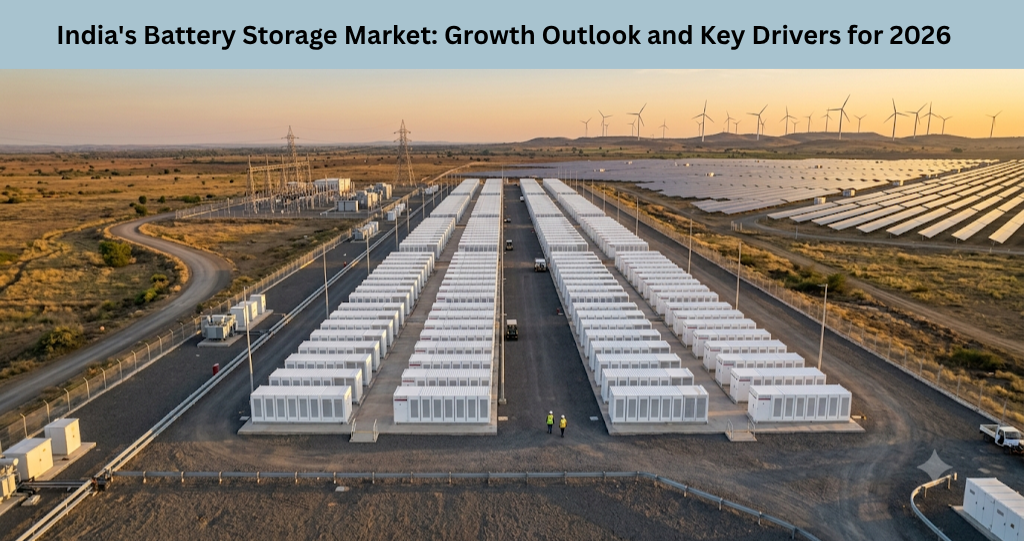
India's Battery Storage Market: Growth Outlook and Key Drivers for 2026
Previous Blog



Blog Comment Form